Student accommodation development and conversion sites
We arrange site acquisition, development and conversion finance for developers building or converting buildings into purpose-built student accommodation. This is finance to fund the scheme as a property investment, not a student maintenance loan or help paying your rent.
Funding development and conversion sites
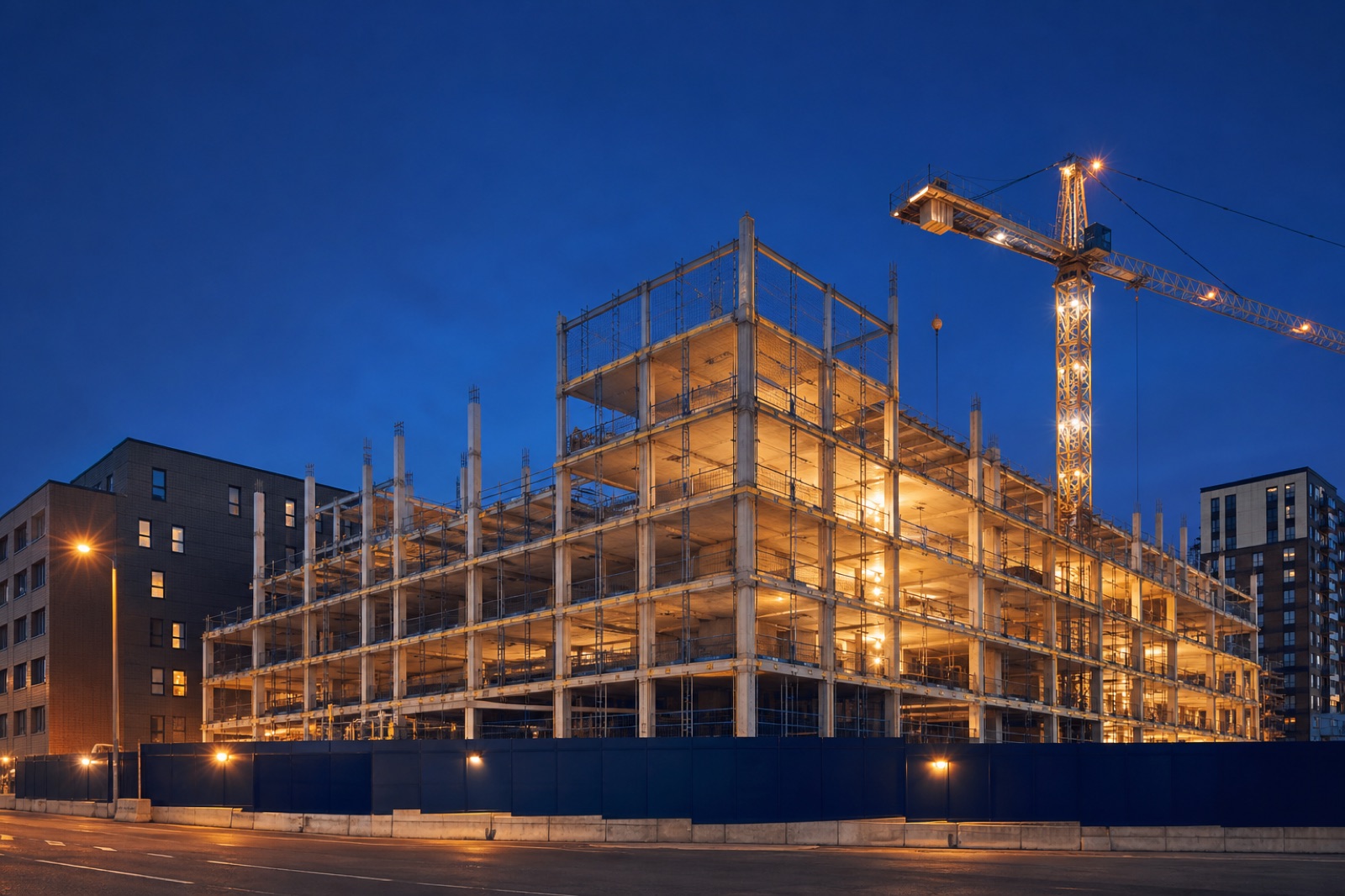
A student development or conversion site is land or a building being taken from its current state to a finished PBSA scheme. That spans a cleared or consented plot for ground-up construction, an office or other commercial building converted to student use, and schemes brought forward under permitted development or a change of use. It is the highest-return and highest-risk end of the market.
Site and conversion finance, as we use the term, is the bridging, development or conversion facility used to buy the site, fund the build or conversion, and carry the scheme to practical completion, with the exit onto stabilisation or investment finance once it lets. Because the asset is not yet producing income, lenders underwrite the scheme, the cost, the GDV and the credibility of the exit rather than a trading record.
Conversions, particularly office-to-PBSA, can be quicker and cheaper than ground-up construction where the structure suits, but they carry their own risks: planning or change-of-use consent, the suitability of the floorplate for student rooms, and the works needed to meet modern standards. Lenders price these carefully against the GDV the finished scheme will support.
We structure the site, build and exit so the route from acquisition to a let, stabilised asset is clear, and we run the market across bridging, development and forward-funding lenders, layering mezzanine or equity where the stack needs it.
What we fund
- Ground-up PBSA development on a consented site
- Office-to-PBSA conversions under change of use
- Permitted-development conversions to student use
- Forward-funded schemes pre-committed to an investor
- Site acquisition ahead of planning or build
- Mixed-use schemes with a student element
Indicative terms
- Development loan to costUp to 60 to 70% of cost
- Development loan to GDVUp to around 60 to 65% of GDV
- Site bridgingUp to around 60 to 70% to secure the site
- DrawdownsStaged against a monitoring surveyor
- Mezzanine or equityWhere senior debt stops short
- Key testsCost, GDV, planning, deliverability, exit, operator
- ExitStabilisation or investment finance on completion
Indicative only. Terms vary by lender, operator and home and are not an offer of finance.
Financing site acquisition and the build
We arrange site and conversion finance in stages and pre-agree the exit. To secure a site we place bridging to around 60 to 70%, including where planning is being progressed. For the build or conversion we arrange development finance to around 60 to 70% of loan to cost, or roughly 60 to 65% of GDV, drawn in stages against a monitoring surveyor who certifies each drawdown. Where an investor commits ahead of completion we arrange forward funding so construction is funded in stages and the asset transfers on practical completion. We pre-agree the exit onto stabilisation or investment finance once the scheme lets, and where senior debt stops short of the capital need we layer in mezzanine or equity. We frame every figure as indicative and never as an offer.
Permitted development, planning and what lenders assess
Lenders assess a development or conversion scheme on cost, GDV, planning and deliverability, then test the developer and the eventual operator. A consented ground-up scheme with a fixed-price build and a credible contractor is the most straightforward; a conversion adds change-of-use or permitted-development risk and questions over whether the floorplate suits student rooms. Lenders treat unresolved planning as a material risk and want a deliverable build programme and a credible exit. Puma Property Finance, Shawbrook, Secure Trust Bank and Together are active across student development and conversion lending, with Alternative Bridging on the site leg. As a broker with no exclusive tie, we match the scheme's risk profile to the right development lender.
Loan to cost, GDV and the exit
A development scheme's finance is built around two numbers, the loan to cost that funds the build and the GDV that sets the value on completion, with the exit being the moment the development debt is repaid. The exit rests on the same demand picture that supports standing assets: near-99% occupancy (Cushman & Wakefield, 2024/25), around 7% rental growth (Cushman & Wakefield, 2024/25), roughly three students per bed (Savills, 2025) and prime net initial yields near 4.25% (Knight Frank, 2025). New delivery remains below the rate needed to keep pace with demand, with around 23,000 beds delivered for 2025/26 (Cushman & Wakefield) against a 200,000-bed pipeline (StuRents, 2025). For lenders, a deliverable scheme in an undersupplied catchment has a clear, well-evidenced exit by refinance or sale.
Finance that suits this setting
- PBSA development financeFunds the build or conversion, drawn against cost and GDV.
- PBSA bridging financeSecures the site or funds planning gain ahead of the build.
- Forward funding and forward commitmentFunds construction in stages for a pre-committed investor.
- Mezzanine and equityTops up the capital stack where senior debt stops short.
Fund a development and conversion sites home
A view on fundability within one working day.
What drives a development or conversion site's numbers
A development or conversion scheme is underwritten on cost and GDV, so the economics are about the journey from a site to a let asset rather than a trading record. The decisive factors are the build or conversion cost, the GDV the finished scheme will support, the planning position, the deliverability of the programme and the credibility of the exit. A conversion, particularly office-to-PBSA, can be quicker than ground-up where the floorplate suits, but it carries change-of-use and planning risk. The exit rests on real demand: new delivery of around 23,000 beds for 2025/26 (Cushman & Wakefield) sits below the rate demand requires, against a 200,000-bed pipeline (StuRents, 2025) and roughly three students per bed (Savills, 2025). We model cost, GDV and the stabilised income that supports the exit.
Indicative development and conversion leverage and rates
Indicatively we arrange site bridging to around 60 to 70% to secure a site, then development or conversion finance to around 60 to 70% of loan to cost, or roughly 60 to 65% of GDV, drawn in stages against a monitoring surveyor who certifies each drawdown. Forward funding lets an investor fund the build in stages and take the asset on completion. We pre-agree the exit onto stabilisation or investment finance once the scheme lets, and layer in mezzanine or equity where senior debt stops short. The exit value is set by net initial yields near 4.25% prime and 5.25% regional (Knight Frank, 2025) on the stabilised income. These are market-typical, indicative figures and never an offer; the terms depend on cost, GDV, planning and deliverability.
Frequently asked questions
Can you convert an office into student accommodation?
Yes, and office-to-PBSA conversion is an established route, sometimes under permitted development and sometimes needing a full change-of-use planning consent. Whether a building suits depends on its floorplate, structure, location and the works needed to meet modern standards. We arrange conversion finance against the GDV the finished scheme will support, with the planning position central to lender appetite.
How is a student accommodation conversion financed?
Usually with development or conversion finance to around 60 to 70% of loan to cost, or roughly 60 to 65% of GDV, drawn in stages against a monitoring surveyor, often preceded by bridging to secure the building. The exit is onto stabilisation or investment finance once the scheme lets. We pre-agree that exit so the route from purchase to a let asset is clear from the outset.
Do you need planning permission to convert a building to PBSA?
Often, yes. Some conversions qualify under permitted development, but many need a full change-of-use planning consent, and student accommodation is frequently treated as sui generis use requiring specific permission. Lenders treat unresolved planning as a material risk, so we make the planning position clear up front and structure finance to suit where consent is still being progressed.
What loan to cost is available for a conversion scheme?
Development and conversion finance is typically available to around 60 to 70% of loan to cost, or roughly 60 to 65% of GDV, with the exact leverage depending on the scheme, the planning position and the deliverability of the build. Where the equity gap is larger than senior debt allows, we arrange mezzanine or equity to complete the capital stack.
What is permitted development?
Permitted development rights allow certain changes of use or building works without a full planning application, such as some office-to-residential conversions, subject to conditions and a prior-approval process. Whether a student scheme qualifies depends on the building and the local position, including any Article 4 direction that removes the right. Lenders want the planning route confirmed before funding the build.
Funding a development and conversion sites home?
Tell us about the home and the operator and we will come back with a view on fundability and likely terms.